42 items. Tick them off here, or print it and take it with you.
The Mom Site · themomsite.com/gear/baby-registry-checklist/
On this page15 sections
Key takeaways
- Inclined sleepers and crib bumpers have been banned hazardous products since November 12, 2022, no matter when they were made. Leave them off your registry and turn them down as hand-me-downs.
- Marketplace plans and most other health plans must cover a breast pump, as a rental or one you keep. Order it through your plan instead of registering for it.
- NHTSA says children under age 1 should always ride rear-facing, and a used car seat may be okay only with no moderate or severe crash history, its labels, no recalls, all its parts and its instructions.
- Newborn-size diapers fit babies under 10 pounds, and Pampers says many babies outgrow them within the first month, so register for more size 1 than newborn.
- As of October 2026, Amazon and Target both offer a 15% registry completion discount, and both require the registry to be active for at least 14 days first.
Baby registry must-haves are a shorter list than most store checklists suggest: a safe place to sleep, a rear-facing car seat, a feeding setup, diapers in more than one size, clothes in a few sizes, and bath and health basics. Leave off a breast pump your health plan covers, skip the products safety agencies warn against, and hold the bigger gear until you know your baby.
Each line has a quantity and a label: must-have (before the birth), optional or can wait. Safety points come from the AAP, CPSC, NHTSA, FDA and CDC; quantities are our estimates unless cited. We research products but don't test them or recommend brands. For appointments and paperwork, see our newborn checklist.
Sleep
The AAP says to use a firm, flat surface, keep blankets, pillows, stuffed toys and bumper pads out of the bed, and skip any product that doesn't meet federal safety standards [1]. CPSC's rule of thumb is nothing but a fitted sheet in a crib, bassinet or play yard [2].
For a play yard, CPSC says to use only the mattress it came with or one that names its brand and model, and never to add padding or stack mattresses [5].
For specific models that meet the federal standards, see cribs by use and bassinets by use.
Car seat and travel
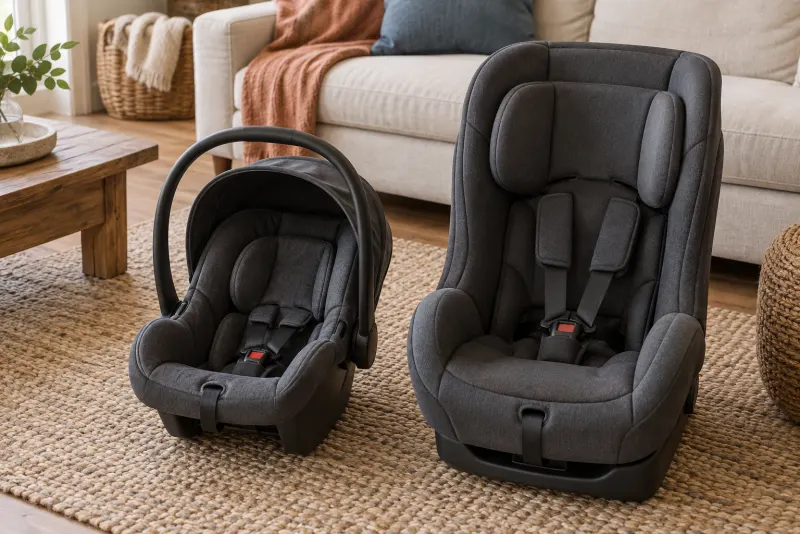
NHTSA says a child under age 1 should always ride rear-facing, in an infant-only seat or in a convertible or all-in-one seat, which typically has higher rear-facing limits [6]. Our infant vs convertible car seat guide helps you choose, and our guides to infant car seats and convertible car seats compare models.
Comparing wheels? See strollers for each kind of family and car seat and stroller combos.
Feeding
Don't register for a breast pump your health plan covers. Marketplace and other health insurance plans, except grandfathered ones, must cover breastfeeding equipment for as long as you breastfeed, as a rental or a pump you keep [7]. The HRSA guidelines behind that rule list double electric pumps, pump parts and milk storage supplies among the supplies covered without cost sharing [8]. See getting a breast pump through insurance, or breast pumps through Medicaid, by state.
If you'll buy a pump yourself, the breast pumps guide starts with what insurance covers. For bottles, see baby bottles by feeding need.
Diapering
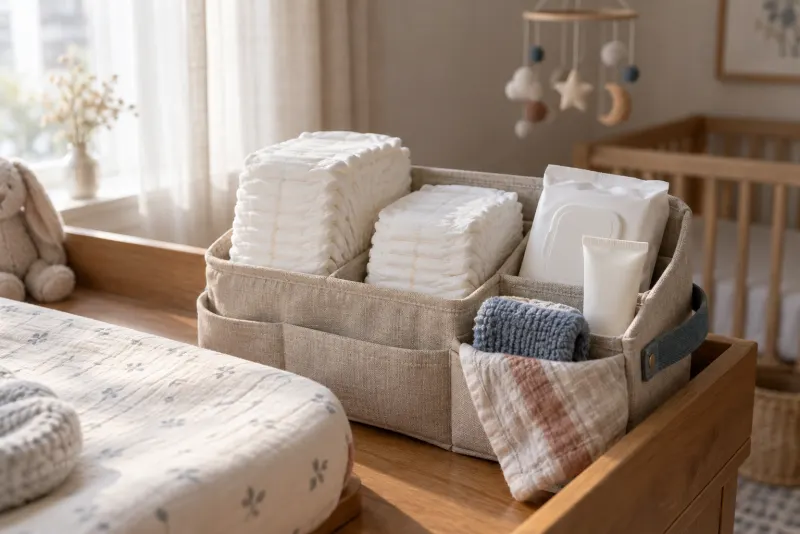
The National Diaper Bank Network says infants need up to 12 diapers a day [11], or up to about 84 a week by our math. The trap is newborn size: Pampers' chart fits newborn diapers to babies under 10 pounds and size 1 to babies from 8 to 14 pounds, and says many babies outgrow newborn size within the first month [12]. Our guide to how many diapers a newborn needs has counts by size.
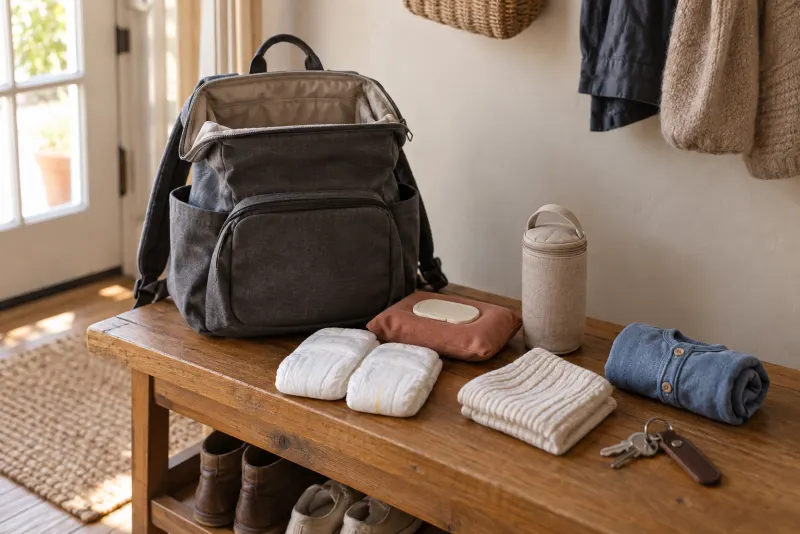
For the bag itself, see diaper bags compared.
Bath and health
Newborns get sponge baths until the umbilical cord stump falls off, usually within one or two weeks [14], so the tub can wait.
Clothing
Spread clothing across sizes instead of piling up newborn outfits. These counts are our estimate of what covers two or three days between laundry loads.
Nursery and gear
If you do add these, see swings and bouncers by use and high chairs for small kitchens, travel and growing kids.
What to skip
These are banned or advised against. Don't register for them, and decline them as gifts or hand-me-downs.
| Product | Why |
|---|---|
| Inclined sleepers; crib bumpers, including padded bumpers, vinyl bumper guards and slat covers | Banned since November 12, 2022, regardless of when they were made [19] |
| Weighted sleep sacks, swaddles and blankets | The AAP and CPSC say not to use them [1][2] |
| Sleep positioners and pillows | CPSC lists them as suffocation risks [2] |
| Nests, pods, in-bed sleepers and hammocks | The AAP says not to use one unless it meets federal sleep-product standards [1] |
| Baby walkers with wheels | The AAP says they're never safe, even with an adult close by [17] |
| Bath seats | The AAP says to avoid them because they can tip over [14] |
| Car seat add-ons not from the seat's maker | The AAP says not to use them [20] |
What can wait: the high chair, infant tub, full-size crib, bigger clothes, toys and baby-proofing gear.
Used and hand-me-down gear
Most hand-me-downs are fine. These items have hard rules.
- Car seats. NHTSA says a used seat may be okay only if it has never been in a moderate to severe crash, has labels showing its date of manufacture and model number, has no recalls, and has all its parts and its instruction book [21]. The AAP says to avoid a seat whose history you don't know and to ask the maker how long the seat can be used [20]. Search the model on NHTSA's recall site [22].
- Cribs. The AAP says not to use cribs with drop rails, and slats should be no more than 2 3/8 inches apart [3]. CPSC tells resellers not to resell a full-size crib made before June 28, 2011, without written proof that it meets the requirements [23].
- Everything else. Search CPSC's recall list [24] and the safety reports on SaferProducts.gov [25] before you accept a bassinet, play yard, swing or stroller.
- Breast pumps. The FDA considers breast pumps single-user devices unless they're designed for multiple users [26].
If buying new is out of reach, see how to get a free crib or a free car seat, and have a certified technician check any seat you're given.
When to register and when to finish
Timing is common practice, not a rule. Many families start in the second trimester, share the registry with shower invitations, and aim to have the must-haves several weeks before the due date.
Perks reward starting early. As of October 2026:
| Registry | Completion discount | Gift returns |
|---|---|---|
| Amazon | 15% (up to $300) from 60 days before your arrival date to 90 days after; registry active 14 days [13] | Eligible gifts, up to 365 days [13] |
| Target | 15% off storewide (Target Circle), redeemable twice, sent 8 weeks before your arrival date; registry active 14 days; expires in 6 months [27] | Most items, one year from the event date [28] |
Terms change, so read your registry's own terms. To start one: create an Amazon baby registry Affiliate link or create a Target baby registry. The Amazon link is an affiliate link, so we may earn a fee if you sign up or buy; the Target link isn't. Either registry works with this checklist.
For the welcome box rules at Amazon, Target, Walmart and Babylist, see registry welcome boxes.
Small spaces and second babies
Short on space? Start with a bassinet or play yard in your room, which fits the AAP's room-sharing advice [1]. Use a changing pad on an anchored dresser instead of a changing table, and pick a bouncer or a swing, not both.
Second baby? Check your car seat's manufacture date against the maker's recommended use period [20][21], and check stored gear for recalls [22][24]. Ask your plan about a new pump or replacement parts; HRSA's guidelines include pump parts [8]. Then register for what wore out and a second sleep space if your older child still uses the crib.
Registry for things money can't buy
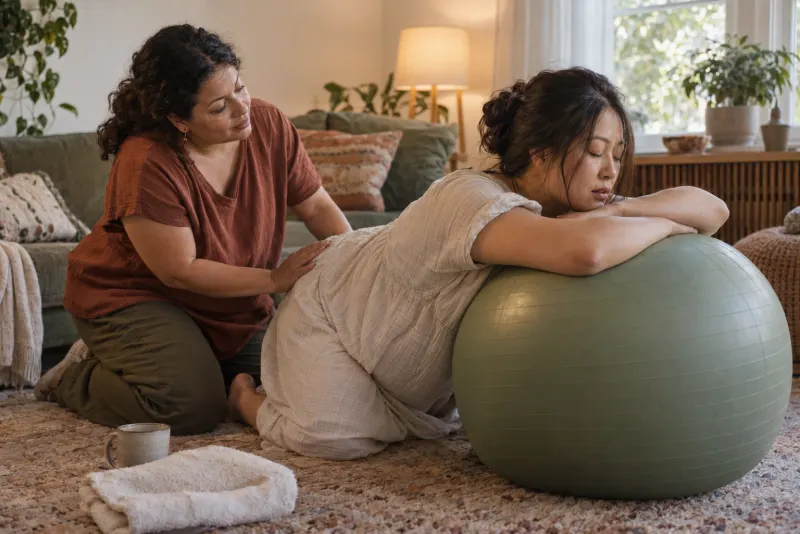
Some of the most useful gifts are help: meals, house cleaning, rides for older kids. If your registry takes cash funds, consider one for a postpartum doula, who supports you at home after the birth. Our newborn checklist shows what those weeks involve.
Before you register for big-ticket items, check our guide to free baby stuff for programs that give families a pump, formula, a crib, a car seat or diapers.
Questions people ask
What are the must-haves for a baby registry?
A crib, bassinet or play yard that meets federal safety standards, a firm mattress and fitted sheets, a rear-facing car seat, a feeding setup, diapers and wipes, sleepers and wearable blankets, washcloths and towels, and a digital thermometer. Most other gear can wait until after the birth.
Should I put a breast pump on my baby registry?
Usually not. Marketplace plans and all other health plans except grandfathered plans must cover a breast pump, either a rental or a new one you keep. Order it through your plan, and use a gift card or cash fund only for an upgrade fee your plan won't cover.
When should I start a baby registry?
Many families start in the second trimester and share the link when shower invitations go out. Amazon and Target both require a registry to be active for at least 14 days before their completion discounts apply, and Target sends its coupon 8 weeks before your expected arrival date.
What should you not put on a baby registry?
Inclined sleepers, crib bumpers, weighted sleep sacks or swaddles, sleep positioners, baby walkers with wheels, bath seats and car seat add-ons that didn't come from the seat's maker. A high chair and an infant tub can wait, since you won't need them in the first weeks.
Is a hand-me-down car seat or crib safe?
A used car seat may be okay only if it has never been in a moderate or severe crash and has its labels, all its parts and its instructions, with no recalls. Skip any crib with a drop side, look up the crib on CPSC's recall site and the car seat on NHTSA's, and have a certified car seat technician check the seat.
Sources
Numbers in brackets in the guide link to these sources.
- 1.How to Keep Your Sleeping Baby Safe: AAP Policy ExplainedAmerican Academy of Pediatrics (HealthyChildren.org), 2026
- 2.Safe Sleep: Cribs and Infant ProductsU.S. Consumer Product Safety Commission (CPSC), 2026
- 3.Choosing a CribAmerican Academy of Pediatrics (HealthyChildren.org), 2026
- 4.Swaddling: Is It Safe for Your Baby?American Academy of Pediatrics (HealthyChildren.org), 2026
- 5.CPSC Warns Consumers to Immediately Stop Using Hiccapop Play Yard MattressesU.S. Consumer Product Safety Commission (CPSC), 2025
- 6.Car Seats and Booster SeatsNational Highway Traffic Safety Administration (NHTSA), 2026
- 7.Breastfeeding benefitsHealthCare.gov (Centers for Medicare & Medicaid Services), 2026
- 8.Women's Preventive Services GuidelinesHealth Resources and Services Administration (HRSA), 2026
- 9.How to Clean, Sanitize, and Store Infant Feeding ItemsCenters for Disease Control and Prevention (CDC), 2026
- 10.CPSC Approves New Federal Safety Standard for Nursing Pillows to Prevent Infant Deaths and Serious InjuriesU.S. Consumer Product Safety Commission (CPSC), 2024
- 11.What is diaper need? (June 2024)National Diaper Bank Network, 2024
- 12.Diaper Size and Weight ChartPampers, 2026
- 13.Baby RegistryAmazon, 2026
- 14.Bathing Your BabyAmerican Academy of Pediatrics (HealthyChildren.org), 2025
- 15.How to Take Your Child's TemperatureAmerican Academy of Pediatrics (HealthyChildren.org), 2024
- 16.CPSC AnchorIt Campaign Marks 10 Years: Fewer Furniture Tip-Overs Lead to Safer American HouseholdsU.S. Consumer Product Safety Commission (CPSC), 2025
- 17.Baby Walkers: A Dangerous ChoiceAmerican Academy of Pediatrics (HealthyChildren.org), 2026
- 18.Starting Solid FoodsAmerican Academy of Pediatrics (HealthyChildren.org), 2026
- 19.Safe Sleep for Babies Act Business GuidanceU.S. Consumer Product Safety Commission (CPSC), 2026
- 20.Car Seats: Information for FamiliesAmerican Academy of Pediatrics (HealthyChildren.org), 2026
- 21.Used Car Seat Safety ChecklistNational Highway Traffic Safety Administration (NHTSA), 2026
- 22.Check for Recalls: Vehicle, Car Seat, Tire, EquipmentNational Highway Traffic Safety Administration (NHTSA), 2026
- 23.Full-Size Baby Cribs (FAQ)U.S. Consumer Product Safety Commission (CPSC), 2026
- 24.RecallsU.S. Consumer Product Safety Commission (CPSC), 2026
- 25.SaferProducts.govU.S. Consumer Product Safety Commission (CPSC), 2026
- 26.Buying and Renting a Breast PumpU.S. Food and Drug Administration (FDA), 2026
- 27.When will I receive my 15% completion coupon? (help article 000062273)Target, 2026
- 28.Target Return PolicyTarget, 2026