47 items. Tick them off here, or print it and take it with you.
The Mom Site · themomsite.com/postpartum/postpartum-essentials-checklist/
On this page16 sections
- Key takeaways
- Postpartum essentials at a glance
- When to have your postpartum essentials ready
- What does the hospital send home with you?
- Postpartum recovery checklist: bleeding and bathroom
- Postpartum essentials for pain, hemorrhoids and constipation
- C-section recovery essentials
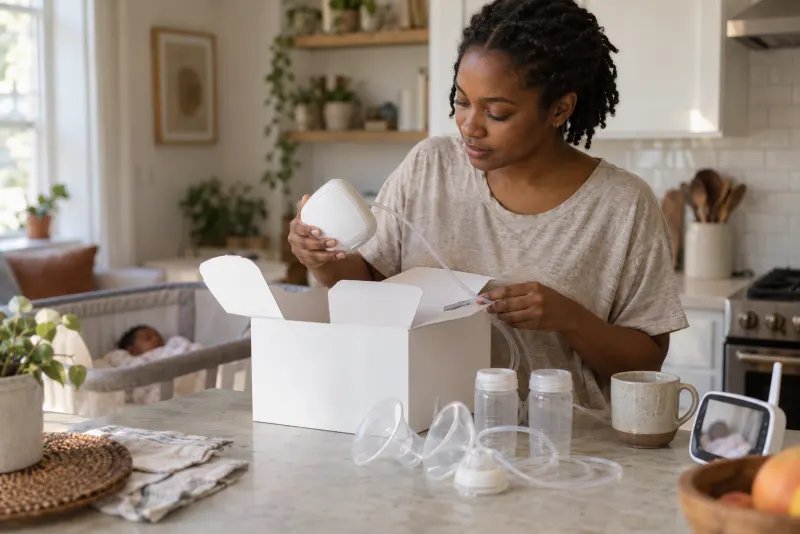
- Breastfeeding and pumping essentials
- Formula-feeding essentials
- Comfort, rest and everyday essentials
- Paperwork and support to line up
- Does insurance, HSA or FSA cover postpartum essentials?
- Postpartum warning signs to keep on the fridge
- What you can skip
- Questions people ask
- Sources
Key takeaways
- Vaginal bleeding after birth can last up to 6 weeks, after a vaginal birth or a C-section, and MedlinePlus says to wait 6 weeks before using tampons. Stock pads, not tampons.
- Hospitals commonly supply mesh underwear, postpartum pads, ice packs and a peri bottle, and Cleveland Clinic says it's common to be sent home with extras.
- Most health plans must cover a breast pump, as a rental or one you keep, plus breastfeeding counseling for as long as you breastfeed. Grandfathered plans are the exception.
- Since 2020, HSA, health FSA, HRA and Archer MSA money can pay for over-the-counter drugs and menstrual care products such as pads without a prescription. Breast pumps and lactation supplies count as medical expenses too.
- CDC lists urgent maternal warning signs for the year after birth, including a fever of 100.4°F or higher, trouble breathing, chest pain, and thoughts of harming yourself or your baby. Seek care right away if you have one.
The postpartum essentials that matter most are simple: heavy pads and comfortable underwear for up to 6 weeks of bleeding, a peri bottle and cold packs for soreness, supportive bras, loose clothes, and feeding supplies that match how you plan to feed [2][3]. Many of these come home with you from the hospital [5][6]. A breast pump is covered by most health plans [7], and HSA or FSA money can pay for over-the-counter medicines and pads [9].
We built this list from federal health guidance (CDC, MedlinePlus, HealthCare.gov, the IRS and USDA's WIC program), hospital discharge and packing instructions, and ACOG's postpartum care recommendations. It's a shopping and planning list, not medical advice. Your own doctor or midwife will tell you what your recovery needs, especially after a C-section, a tear or a complicated birth.
Quantities below are our estimates for the first few weeks, not official guidance. Buy a little, then restock once you know what you actually use.
Postpartum essentials at a glance
If you only read one section, read this one. These are the items that show up across hospital and federal guidance, and who usually pays for each.
| Item | Why you need it | Hospital may send some home? | Who might pay |
|---|---|---|---|
| Heavy postpartum pads | Bleeding lasts up to 6 weeks [2][3] | Yes [5][6] | HSA or FSA (pads count as menstrual care products) [9] |
| Mesh or disposable underwear | Holds pads, washes or tosses | Yes [5][6] | You |
| Peri bottle | Rinsing instead of wiping [4] | Yes [4][5] | You |
| Cold packs, witch hazel pads | Swelling and soreness [4][5] | Often during the stay [5] | You, or HSA/FSA for OTC products [9] |
| Sitz bath | Soaking a sore perineum [4] | Varies | Varies by plan |
| Pain reliever your provider okays | Most people need some for days to weeks [3] | Hospital pharmacy during your stay | HSA or FSA without a prescription [9] |
| Breast pump | Pumping or relieving engorgement | No | Health plan must cover it [7]; WIC may help [10] |
| Lactation supplies (nipple cream, nursing pads, storage bags) | Breastfeeding comfort and storage | Sometimes | HSA or FSA; lactation supplies are medical expenses [8] |
| Supportive or nursing bras | Comfort and support [2][6] | No | You |
When to have your postpartum essentials ready
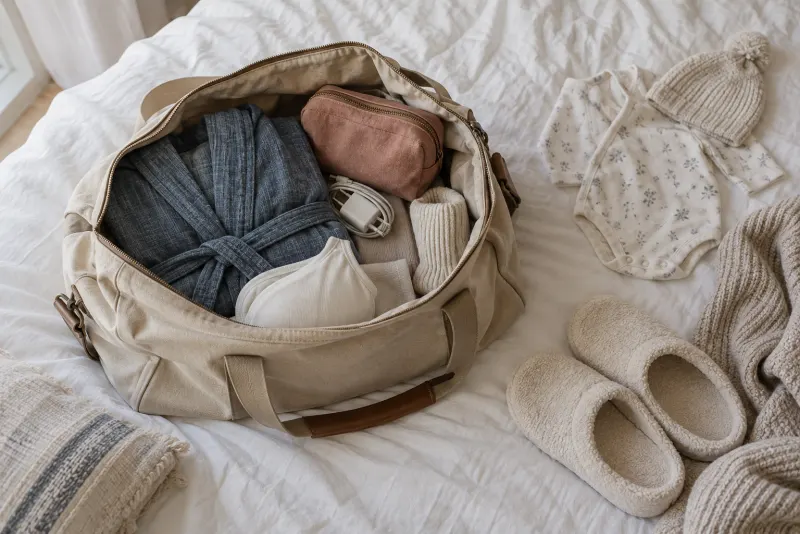
Aim to have everything at home by about 36 weeks, the same time most hospitals suggest you have your bag packed. Our hospital bag checklist covers what to bring for the birth itself. This list is for the weeks after, at home.
A practical tip: set up two small stations before the birth. One goes in the bathroom you'll use most (pads, peri bottle, cold packs, wipes). The other goes wherever you'll feed the baby (water bottle, snacks, phone charger, burp cloths, nursing pads). You'll be glad you aren't hunting for things one-handed at 3 a.m.
What does the hospital send home with you?
Usually more than you'd expect. Baptist Health in Kentucky lists mesh panties, ice packs, postpartum pads, a peri bottle and Tucks pads among the things it provides [5]. Cleveland Clinic says it's common to be sent home with peri bottles, diapers and wipes, mesh underwear and maternity pads, so leave room in your bag [6].
Supplies vary by hospital, and birth centers and home births work differently. Before you buy a store-made "postpartum recovery kit," ask your hospital or midwife what you'll go home with. Then fill only the gaps.
Postpartum recovery checklist: bleeding and bathroom
Bleeding after birth, called lochia, happens after both vaginal and cesarean births. It's heaviest in the first week and can last up to 6 weeks, shifting from red to pink to yellow or white [2][3]. MedlinePlus says to wait 6 weeks before using tampons [2], so pads are the only option for now.
Watch your bleeding. Call your provider if you soak more than one pad an hour, pass clots bigger than a golf ball, or still have heavy bleeding after 4 days [2][4]. CDC lists vaginal bleeding or discharge after pregnancy among its urgent warning signs [1].
Postpartum essentials for pain, hemorrhoids and constipation
Most people need some pain medicine for the first few days to 2 weeks after a C-section [3], and soreness after a vaginal birth is common too. Ask your doctor or midwife which pain relievers are safe for you, especially if you're breastfeeding [3].
C-section recovery essentials
After a cesarean, you're healing from abdominal surgery, so a few items change. MedlinePlus says not to lift anything heavier than your baby for 6 to 8 weeks and to wait at least 2 weeks before driving [3].
Call your provider for a fever above 100°F that doesn't go away, redness or drainage at the incision, or a painful or swollen leg [3]. Steri-Strips that haven't come off on their own can usually come off after about a week, per ChristianaCare, but follow your own discharge instructions [4].
Breastfeeding and pumping essentials
If you plan to breastfeed, a few supplies make the first weeks easier. Engorgement often happens as your milk changes from colostrum to mature milk, and for most people it eases within a few days [12].
Breastfeeding hurts more than you expected, or your baby isn't latching? Plans must cover breastfeeding support and counseling for as long as you breastfeed [7]. Read when to see a lactation consultant or find a lactation consultant.
Formula-feeding essentials
If you're formula-feeding, or doing both, your supply list centers on safe preparation. CDC says to use prepared formula within 2 hours, finish a feeding within 1 hour of starting, and throw out what's left in the bottle [14].
CDC adds extra steps for babies under 2 months, born before 37 weeks or with a weakened immune system, including mixing powdered formula with water that was boiled and cooled for about 5 minutes [14]. Follow the label and your pediatrician's advice.
Comfort, rest and everyday essentials
These aren't medical, but they make recovery easier.
For the baby's side of things (diapers, a safe sleep space, clothes, a car seat), see our newborn checklist. If diapers strain your budget, our guide to free diapers lists diaper banks and other help.
Paperwork and support to line up
The least glamorous postpartum essentials are phone numbers and appointments. ACOG recommends contact with your obstetric care provider within the first 3 weeks after birth, then ongoing care as needed, ending with a full postpartum visit no later than 12 weeks after birth [15]. MedlinePlus says to plan a checkup in 4 to 6 weeks after a vaginal birth [2].
Our after-the-birth checklist walks through the birth certificate, adding your baby to insurance and other paperwork.
Does insurance, HSA or FSA cover postpartum essentials?
Some of them. Your health plan covers the breast pump and breastfeeding help, and tax-advantaged accounts can cover many of the over-the-counter items.
| Item | Health plan | HSA, health FSA, HRA | Notes |
|---|---|---|---|
| Breast pump | Must cover, except grandfathered plans [7] | Yes, as a medical expense [8] | Plans can set rules on type, rental and timing, and may need your doctor's okay [7] |
| Breastfeeding counseling | Must cover for as long as you breastfeed [7] | Yes, if you pay out of pocket | Can start before or after birth [7] |
| Lactation supplies | Varies by plan | Yes, supplies that assist lactation [8] | Extra bottles for food storage don't count [8] |
| Over-the-counter medicines | Usually no | Yes, no prescription needed [9] | Still not deductible on your tax return, except insulin [9] |
| Pads | Usually no | Yes, menstrual care products include pads [9] | Ask your administrator if postpartum pads qualify at your plan |
| Pump through WIC | Not insurance | Not applicable | If Medicaid won't cover one or you're uninsured, WIC may be able to provide or rent a pump [10] |
A few practical notes:
- Call your plan before the birth. The WIC program's advice is to call your insurer before your baby arrives to ask whether you'd rent or keep a pump, and whether you'd receive it directly or buy it and get reimbursed [10]. Our breast pump benefits by state page covers Medicaid rules.
- Check WIC. If your income is limited, WIC also offers breastfeeding support. See WIC eligibility.
- Save receipts. HSA and FSA rules depend on your plan, and your administrator may ask for them.
- Medicaid varies. Every state's Medicaid program is different, so check pump coverage with your Medicaid plan before the birth [10].
Postpartum warning signs to keep on the fridge
Print this part. CDC's Hear Her campaign lists urgent maternal warning signs for pregnancy and the year after birth [1]. If you have any of these, seek medical care right away. In an emergency, call 911.
- Headache that won't go away or gets worse over time
- Dizziness or fainting
- Changes in your vision
- Fever of 100.4°F or higher
- Extreme swelling of your hands or face
- Thoughts about harming yourself or your baby
- Trouble breathing
- Chest pain or a fast-beating heart
- Severe nausea and throwing up
- Severe belly pain that doesn't go away
- Vaginal bleeding or discharge after pregnancy
- Severe swelling, redness or pain of your leg or arm
- Overwhelming tiredness
These signs come straight from CDC [1]. MedlinePlus also says to call your provider about a red, warm or tender breast, foul-smelling discharge, or increasing pain [2].
Your mental health counts as recovery too. The National Maternal Mental Health Hotline, 1-833-TLC-MAMA (1-833-852-6262), takes calls and texts 24 hours a day, 7 days a week. It's free and confidential, in English and Spanish, with interpreters for other languages [16]. If you're thinking about harming yourself, call or text 988 or call 911. Our guide to postpartum depression help explains treatment, coverage and support groups.
What you can skip
You don't need everything a "postpartum must haves" list online tells you to buy. A few things to think twice about:
- A complete store-made recovery kit before you know what your hospital sends home [5][6].
- Tampons and menstrual cups for the first 6 weeks, since MedlinePlus says to wait [2].
- Stocking up on one brand of bottle or nipple before your baby has tried it.
- Anything medicated your provider hasn't okayed, including sprays, suppositories, herbal sitz soaks and supplements [2][4].
The goal is a calm first few weeks, not a full cupboard. Get the basics ready, line up help, keep the warning signs where everyone can see them, and ask your own doctor or midwife when something doesn't feel right.
Questions people ask
What do I need for postpartum recovery at home?
The basics are heavy postpartum pads, comfortable or disposable underwear, a peri bottle, cold packs, a sitz bath, supportive bras, loose clothes, and a pain reliever your provider has okayed. Add feeding supplies for how you plan to feed, plus water, easy food and a phone list of who to call.
How many postpartum pads do I need?
There's no official number. Bleeding can last up to 6 weeks and is heaviest in the first week, so our estimate is two or three packs of heavy overnight pads for the first weeks, then lighter pads or liners. Call your provider if you soak more than one pad an hour.
Does the hospital give you postpartum supplies to take home?
Often, yes. Hospitals commonly supply mesh underwear, pads, ice packs and a peri bottle during your stay, and Cleveland Clinic says it's common to be sent home with peri bottles, mesh underwear and pads. Ask your nurse before you leave.
Does insurance cover postpartum supplies?
Health plans must cover a breast pump and breastfeeding support, except grandfathered plans. Pads, sitz baths and other recovery supplies usually aren't covered by insurance, but you can often pay for over-the-counter medicines and menstrual-type pads with HSA or FSA money.
Can I use my HSA or FSA for postpartum essentials?
Often, yes. The IRS says over-the-counter drugs and menstrual care products such as pads can be paid for from an HSA, health FSA, HRA or Archer MSA, and breast pumps and lactation supplies count as medical expenses. Check with your plan administrator for specific items.
What are postpartum warning signs to call 911 or a doctor about?
CDC lists urgent maternal warning signs for the year after birth, including a headache that won't go away, vision changes, fever of 100.4°F or higher, trouble breathing, chest pain, severe belly pain, heavy bleeding, leg swelling or pain, and thoughts of harming yourself or your baby. Seek care right away. In an emergency, call 911.
Sources
Numbers in brackets in the guide link to these sources.
- 1.Urgent Maternal Warning SignsCenters for Disease Control and Prevention (CDC), Hear Her campaign, 2026
- 2.Vaginal delivery - dischargeMedlinePlus, U.S. National Library of Medicine, 2026
- 3.Going home after a C-sectionMedlinePlus, U.S. National Library of Medicine, 2026
- 4.After Delivery: Caring for YourselfChristianaCare
- 5.What to Pack in your Hospital BagBaptist Health (Kentucky)
- 6.What To Pack in Your Hospital Bag: A Labor and Delivery ChecklistCleveland Clinic, 2026
- 7.Breastfeeding benefitsHealthCare.gov (Centers for Medicare & Medicaid Services), 2026
- 8.Publication 502: Medical and Dental ExpensesInternal Revenue Service (IRS), 2025
- 9.Frequently asked questions about medical expenses related to nutrition, wellness and general healthInternal Revenue Service (IRS), 2026
- 10.Finding a Breast PumpWIC Breastfeeding Support, U.S. Department of Agriculture
- 11.About Breast Pump HygieneCenters for Disease Control and Prevention (CDC), 2026
- 12.EngorgementWIC Breastfeeding Support, U.S. Department of Agriculture
- 13.Breastfeeding challengesOffice on Women's Health, U.S. Department of Health and Human Services
- 14.Infant Formula Preparation and StorageCenters for Disease Control and Prevention (CDC), 2026
- 15.Optimizing Postpartum Care (Committee Opinion No. 736)American College of Obstetricians and Gynecologists (ACOG), 2018
- 16.National Maternal Mental Health HotlineMaternal Mental Health Leadership Alliance